Hiring Robotics Leaders in 2026: Market Data and What to Look For
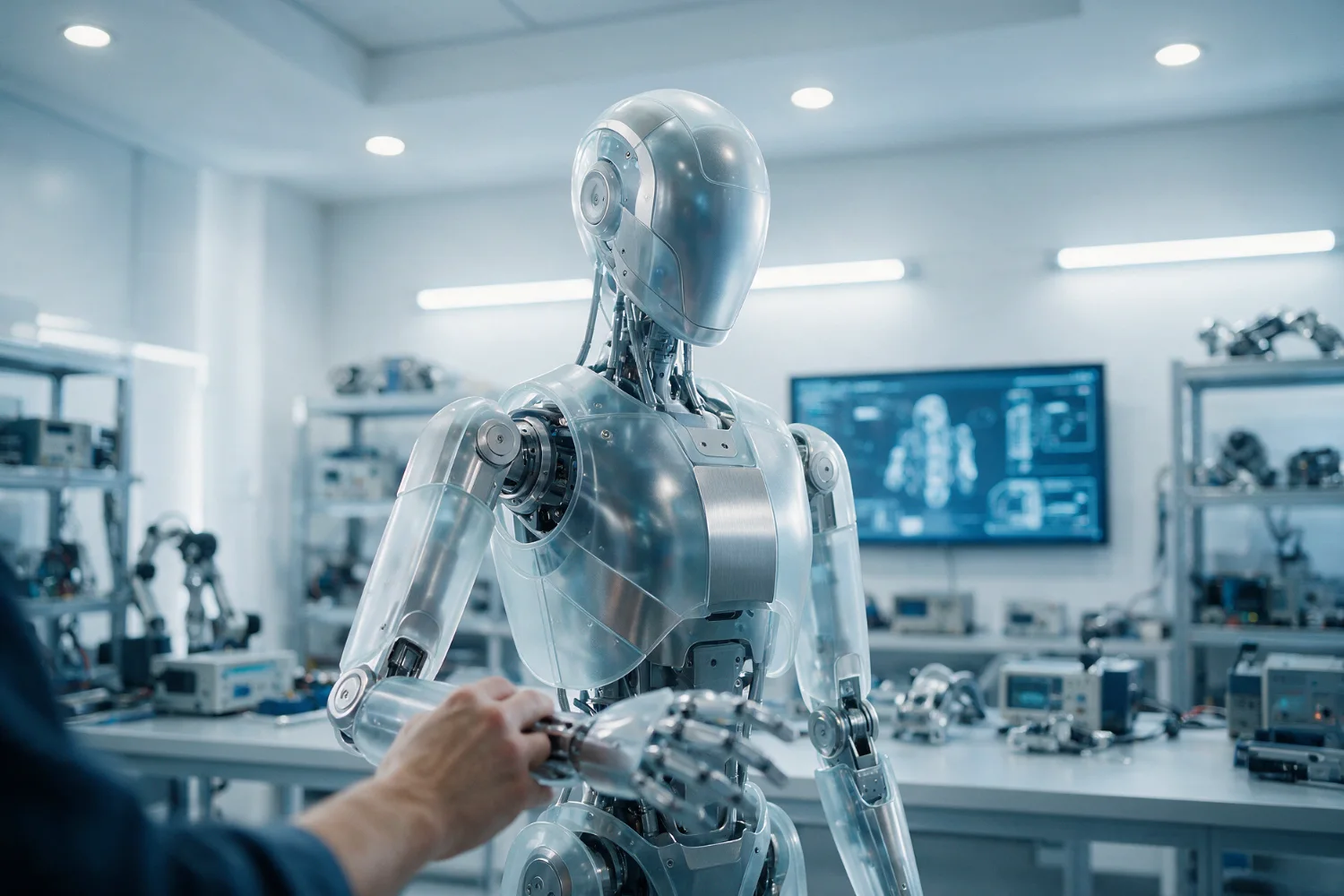
Short answer: Robotics is moving from factory automation to AI-driven, general-purpose machines, and leadership demand is following the money. Venture funding for humanoid robotics reached $6.1 billion across 139 deals in 2025, up from $1.5 billion across 65 deals in 2024, according to PitchBook. Meanwhile, factories installed 542,000 industrial robots in 2024, the fourth year in a row above 500,000, according to the International Federation of Robotics.
Key robotics market statistics at a glance
- $6.1 billion in humanoid robotics VC funding in 2025, up more than 300% from $1.5 billion in 2024 (PitchBook, February 2026).
- 542,000 industrial robots installed worldwide in 2024, with an operational stock of 4.66 million (IFR World Robotics 2025).
- China installed 295,000 robots in 2024, 54% of the global total, followed by Japan (44,500), the US (34,200), South Korea (30,600) and Germany (about 27,000).
- Installations are forecast to reach 575,000 in 2025 and exceed 700,000 a year by 2028 (IFR).
- Asia accounted for 74% of 2024 installations, Europe 16% and the Americas 9%.
Why is demand for robotics leaders rising?
- AI has changed what robots do. Advances in computer vision and robotics-specific foundation models, which PitchBook cites as the driver of funding growth, require leaders who understand both machine learning and hardware.
- Funded startups need to scale. A 4-fold jump in funding means more companies moving from prototype to production, each needing engineering, manufacturing and safety leadership.
- Industrial buyers need in-house expertise. Manufacturers deploying hundreds of robots need leaders who can run automation as a strategic program.
Which robotics leadership roles are in demand?
- VP of Robotics or Head of Robotics: owns the robotics roadmap, team and integration of hardware, software and AI.
- Head of Robot Learning or Embodied AI: leads foundation models, simulation and learning from demonstration.
- VP of Hardware Engineering: mechanical, electrical and actuator design through to manufacturability.
- Head of Manufacturing Scale-up: takes robots from pilot builds to volume production and supply chain.
- Head of Robotics Safety and Validation: functional safety, testing and certification for robots working near people.
See the AI leadership roles guide for more titles.
What does a strong VP of Robotics look like?
- Full-stack range: credible across mechanical, electrical, controls, software and machine learning, even if expert in only one or two.
- Shipping record: has taken a robot from prototype to field deployment, not only to a lab demo.
- Safety judgment: understands standards and testing for robots operating near humans.
- Manufacturing and supply chain awareness: knows cost, yield and supplier risk, especially given Asia's dominance in robot production.
- Ability to recruit: a strong network across robotics labs, autonomous vehicles and industrial automation.
Where do robotics leaders come from?
Common source pools include autonomous vehicle companies, industrial automation firms, research universities and robotics labs, aerospace and defense, and consumer hardware companies. Academic researchers bring deep expertise but often need support on product delivery and team scale.
Frequently asked questions
How much was invested in humanoid robots in 2025?
About $6.1 billion in venture funding across 139 deals, according to PitchBook.
How many industrial robots are installed each year?
542,000 in 2024, according to the IFR, with more than 700,000 a year expected by 2028.
What background should a VP of Robotics have?
Breadth across hardware, software and AI, plus a record of moving robots from prototype into real-world deployment safely.
Get robotics leadership news every week: subscribe to the weekly brief.